Bottom Line Up Front: Artificial sweeteners – while calorically neutral and with minimal rise in insulin, for some reason – may not help with weight loss, and may even be associated with harm (increased in Type 2 Diabetes, CVD, CVD mortality and all-cause mortality.
So now what? Is that one drink going to kill you? No. Stop obsessing over it. Will it really make you lose tons of weight and make you a Greek God or Goddess – likely not. Enjoy that Coke Zero or Keto Brownie – please just don’t have it every day thinking its actually good for you. What we do know, is that may not be true.
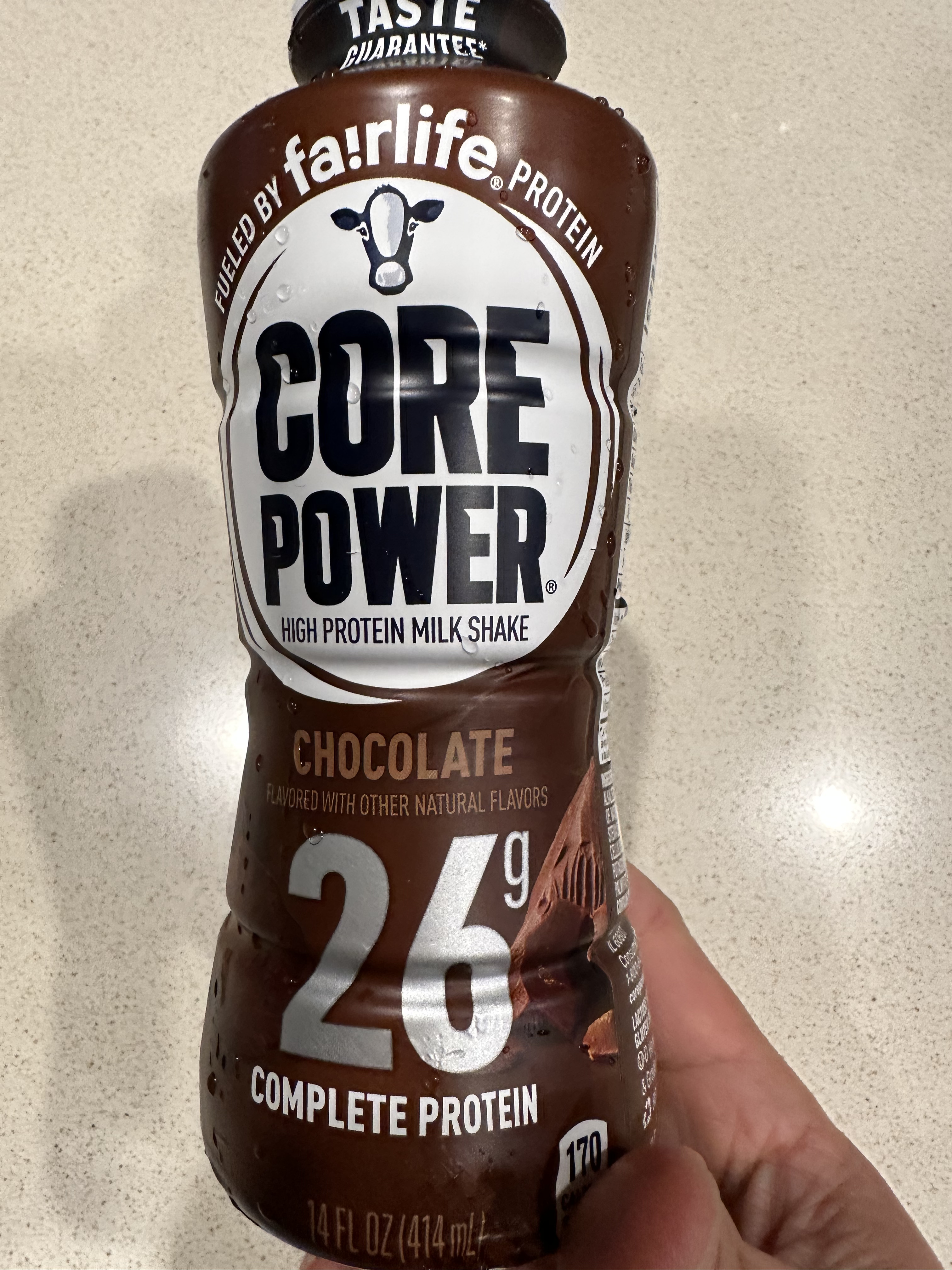
Recommendations: Avoid NNS, but an occasional intake with foods made with NNS is fine. If you have a choice, allulose would be my choice since taste just as good as sugar. Next would be erythritol (monk fruit). Everything else – stevia (i don’t like the aftertaste), sucralose, acesulfame K, aspartame, saccharin – for me depends on the taste. These Fairlife milk products are the bomb! While it has NNS (sucralose), I still drink it occasionally to get the quick tasty protein without the bloat of lactose and sugar.
Unpacking the Evidence
Recently the WHO released their “Use of Non-Sugar Sweeteners” recommendations.(1) I read the executive summary and basically the RCT suggests little advantage in using artificial sweeteners for weight loss and BMI reduction, specifically for long term.
They also mentioned prospective data suggesting harm – that these NNS actually was associated with increased BMI and obesity as well as increased risk for Type 2 Diabetes, CVD, CVD mortality and even all-cause mortality. One of the more recent studies published in the BMJ in Nov 2002 linked aspartame, acesulfame potassium and sucralose to increased CVD. (2)
Mind you, this is based on pretty weak evidence, especially for the prospective studies. Remember it may not be the NNS, it also may be the people and the characteristics who choose to use NNS, and the other foods associated with NNS. For example, if you have water with NNS vs. a “keto brownie” every day..well is it the NNS, or the extra stuff in the keto brownie? Also those that drink Coke Zero every day – do you think these are the same people that are maximally exercising 150 minutes a day and eating a plant-based vegan diet? Yes, the researchers try to control for that, but unless it’s well randomized and controlled – there will ALWAYS be potential confounders. Case Controlled studies – again, high risk for bias and confounders.
So, what to do with these Non-Nutritive Sweeteners, aka artificial sweeteners? Here are some key items to consider when looking at this recommendation, and really, for any other articles.
#1 Which NNS are included in the Study?
Aspartame, Sucralose, Stevia, Saccharin, acesulfame potassium are included. So, to me, if it’s not one of those, then you really can’t apply this recommendation. So what about Erythritrol? (3) (more on this later) What about Allulose? (4,5)
#2 What Types of Studies are Included?
In the WHO Systematic Review – they reviewed RCTs, Prospective Cohorts and Case Controlled. For me, pay attention to the RCTs and ensure you don’t jump to hard conclusions on the cohort or case controlled studies. This to me is the fallacy and huge bias in nutrition research – we base too many policies and statements on really weak nutritional evidence.
#3. Is it a Disease Oriented Evidence (DOE) or is a Patient Oriented Evidence that Matters (POEM)?
We call this a POEM or a DOE. Disease oriented evidence are markers, numbers, surrogates. POEMs are outcomes that matter to people. For example the famed HDL story. Raising HDL by a medicine is a great (DOE), but if raising HDL by said medicine killed you 2 times more then if you didn’t lower it, then who cares right? The flip side – if I gave you sugar and it helped you lose weight, then that would be a meaningful outcome. For these NNS, some of these are DOEs – lowers insulin response, lowers glucose response compared to sugar, but if it doesn’t help you lose weight – should this matter? Or if it kills you more (as suggested) then it would potentially harm you. Understanding the type of articles and the measures are extremely important.
#2 What true POEMs are based on Randomized Controlled Trials?
RCTs are the gold standard. If you really look at the evidence, there are some RCT data that shows some weight loss but what the WHO mentioned is that the effect was not sustained after 3+ months. All the harm are based on prospective cohort studies – not bad – but with nutrition research, these can be fraught with confounders as mentioned above.
POE: Weight Loss
RCTs demonstrated + weight loss in most of the studies. BUT, prospective studies however, demonstrated Higher weight with NNS! What to believe? If you ask me, choose the RCTs – the longest was 18 months, so you say that for 18 months, NNS can lower weight. Afterwards? who knows. Does prolonged use of NNS change microbiome and then cause increased weight? No one knows. These are all theories.
DOE: Fasting Insulin, Fasting glucose, A1c
Most of the RCTs show improvement of insulin glucose and A1c. So even the WHO has “moderate” certainty that NNS is pretty neutral for insulin/glucose and A1c. But, to me this is a DOE – unless long term studies show that it links to decreased Type 2 Diabetes, or CVD, well this is all still a DOE. Even that recent erythritol study – a classic DOE in disguise as a POEM. See if you can find why..
POE: CVD, All cause mortality, Cancer
While these are definitely POEMs, the hard outcome are all based on prospective observational studies. and the certainty is low to very low, according to the WHO. So i would not be entirely surprised if another study came out tomorrow that says that NNS reversed heart disease. This is such low quality evidence, I personally wouldn’t take much stock in this – even if it reports that NNS can cause harm. Can it? Sure. Can it save lives? Sure.
Conclusions
Long term, RCT are needed to really determine the harm or benefit profile of NNS. Bottom line though, it dose appear to not cause glucose spikes, and doesn’t raise insulin or A1c levels as well as in the short term can even help you lose weight. How do we then apply this evidence to you today? Well, it’s all based on your risk tolerance, your preference for taste and your desire to care about it. If you want to have a bit of NNS with your food or drink and it makes you feel better that your CGM won’t alarm, well if i had a choice, I’d choose allulose all day long. It tastes super good, is “natural” and does nothing to your insulin and glucose. The main drawback – it is hard to find and expensive. Foods laced with allulose are often laced with other sweeteners too, btw.
REFERENCES
- Use of Non-Sugar Sweeteners. WHO Guidelines. May 15, 2023. Accessed at: https://www.who.int/publications/i/item/9789240073616 on May 20, 2023.
- Debras C, Chazelas E, Sellem L, Porcher R, Druesne-Pecollo N, Esseddik Y, de Edelenyi FS, Agaësse C, De Sa A, Lutchia R, Fezeu LK, Julia C, Kesse-Guyot E, Allès B, Galan P, Hercberg S, Deschasaux-Tanguy M, Huybrechts I, Srour B, Touvier M. Artificial sweeteners and risk of cardiovascular diseases: results from the prospective NutriNet-Santé cohort. BMJ. 2022 Sep 7;378:e071204. doi: 10.1136/bmj-2022-071204. PMID: 36638072; PMCID: PMC9449855.
- Witkowski M, Nemet I, Alamri H, Wilcox J, Gupta N, Nimer N, Haghikia A, Li XS, Wu Y, Saha PP, Demuth I, König M, Steinhagen-Thiessen E, Cajka T, Fiehn O, Landmesser U, Tang WHW, Hazen SL. The artificial sweetener erythritol and cardiovascular event risk. Nat Med. 2023 Mar;29(3):710-718. doi: 10.1038/s41591-023-02223-9. Epub 2023 Feb 27. PMID: 36849732.
- Fei Au-Yeung, Alexandra L. Jenkins, Steve Prancevic, Esther Vissers, Janice E. Campbell, Thomas M.S. Wolever. Comparison of postprandial glycemic and insulinemic response of allulose when consumed alone or when added to sucrose: A randomized controlled trial, Journal of Functional Foods Volume 105,2023, https://doi.org/10.1016/j.jff.2023.105569. (https://www.sciencedirect.com/science/article/pii/S175646462300169X)
- Yuma T, Tokuda M, Nishimoto N, Yokoi H, Izumori K (2023) Allulose for the attenuation of postprandial blood glucose levels in healthy humans: A systematic review and meta-analysis. PLoS ONE 18(4): e0281150. https://doi.org/10.1371/journal.pone.0281150

 Robert Oh, MD, MPH
This article provides helpful insights into the use of Non-Nutritive Sweeteners (NNS). While their impact on weight loss is inconclusive, their association with harm such as increased risk for Type 2 Diabetes and CVD warrants attention. The article recommends avoiding NNS but occasional use with foods made with NNS is fine.
founder of balance thy life https://balancethylife.com
LikeLike