

Omega-3s are popular as a supplement and I wanted to share my thoughts and go a bit into the evidence behind omega-3s. I wrote a review article in 2005 in the Journal of the American Board of Family Medicine and this is an update to that article.
BLUF (Bottom Line Up Front)
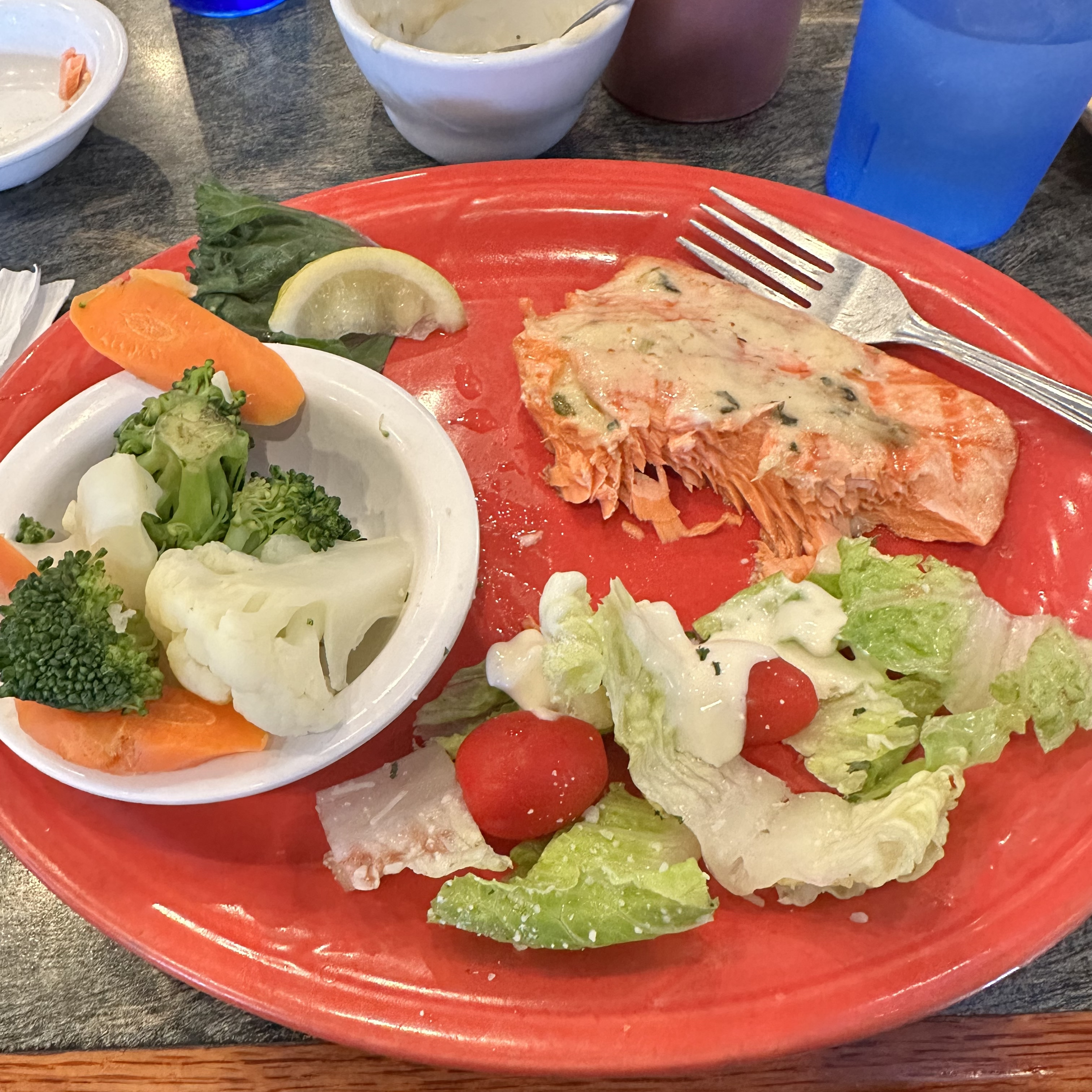
Nearly 20 years later, the benefits for all cause mortality and CVD is less than back in 2005. The AHA still recommends fatty fish meals and or 1gm of supplementation daily. Stick with 1gm of EPA and DHA total daily, and if you have some Rheumatoid Arthritis and can’t handle NSAIDs – you may want higher doses (3-6gm) If you have HyperTG and want to lower your risk of pancreatitis – stick with prescription (Rx) doses. Finally talk to your ob-gyn or family physician if omega-3 supplementation during pregnancy makes sense for you! These studies differ in concentration of omega-3s as well as the ratio of EPA and DHA, so you really have to understand the doses and concentration. To me, while it may be useful for arthritis, decreasing inflammation and perhaps CVD prevention, for most people, stick to the natural form of omega-3s – the highest concentration of which is wild salmon. So go wild on fish, specifically salmon.
The Theory
It all started with the Inuits – native eskimos who researchers linked lower heart disease with their diet of mainly whale, seal and fish. The theory was that these seafood were rich in omega-3 fatty acids which conferred their CV benefit. So why omega-3s? the other second theory is that Omega-3 / Omega-6 the higher the ratio is in your bloodstream the better it is linked with health. So omega-3s tend to be “anti-inflammatory” vs omega-6’s which may be more “pro-inflammatory” due to its relationship to the arachidonic acid pathway. I don’t want to get detailed on the biochemistry, but it is important to delve into the theory of why omega-3s continue to be popular.
The Evidence
I wrote about the Practical Applications of Fish Oil back in 2005 – and many of its principles still remain true. Read it for details on the theory and the evidence back then. I am going to attempt to update the evidence thus far and how the pendulum has swung away from Omega-3s. I’ll tackle it in the same order I did in 2005.
Cardiovascular Disease
This is where the body of evidence generally has been less favorable for fish oil (omega-3s) use in CVD. Let’s break it down to primary prevention (when there is no known heart disease) to secondary prevention (where there is known coronary heart disease). This Cochrane Review – has tons of data and information and has been updated in 2020.
Primary Prevention – little if any benefit
Probably NOT beneficial. Now, I have to say for primary prevention this has been shown time and time again, through different RCTs – that it didn’t do much for all-cause mortality – the gold standard. However, there may be a tiny benefit for cardiovascular events.
Secondary Prevention – may have some benefit
This is where the evidence may suggest some benefit for CVD and events relating to CVD. However, there may be an increased risk for atrial fibrillation (unclear mechanism). If you DO have established CAD, then the American Heart Association recommends that omega-3 supplementation is reasonable for secondary prevention, and maybe – those at high risk (HTN, diabetes, etc). Check out the AHA Scientific Advisory Statement for details. What’s the dose? Who knows? Up to 3gm of DHA and EPA or 1gm of EPA/DHA or 2 fatty fish meals a week.
Hypertriglyceridemia – clear benefit
Pretty clear here – omega-3s lower triglycerides. However, as mentioned above, not necessarily to reduce CV risk but to lower risk for pancreatitis. I only advise Rx use when triglycerides are above 500mg/dl to reduce the risk of pancreatitis. See our article in AFP here: Hypertriglcyeridemia. Caveat – like the AHA recommends – use prescription forms, please!
Rheumatoid Arthritis – Autoimmune Disease – maybe, since it’s pretty safe?
This huge study – the VITAL study demonstrated the Vitamin D 50mcg – 2000 int units daily along with 1gm of DHA/EPA omega 3 – may reduce incidence of autoimmune disease. Which one is it? unknown. Will higher doses make more of a difference? For Rheumatoid Arthritis – maybe 3-6gm (this is a lot!!).
Maternal and Fetal Benefits – probably good for mom and baby
A Cochrane Review recently mentioned and confirmed benefits to prevent pre-term births as I wrote in 2005. For pediatric outcomes – it may also improve neurodevelopmental outcomes.
Conclusion
The article I wrote in 2005 really has staying power. I would say the only caveats nearly 20 years later is that the benefits for all cause mortality and CVD is less than back in 2005. The AHA still recommends fatty fish meals and or 1gm of supplementation daily. Stick with 1gm of EPA and DHA total daily, and if you have some Rheumatoid Arthritis and can’t handle NSAIDs – you may want higher doses. If you have HyperTG and want to lower your risk of pancreatitis – stick with Rx doses. Finally talk to your ob-gyn or family physician if omega-3 supplementation during pregnancy makes sense for you. In any case – eat more Wild Salmon!
REFERENCES
1. Oh R. Practical applications of fish oil (Omega-3 fatty acids) in primary care. J Am Board Fam Pract. 2005 Jan-Feb;18(1):28-36. doi: 10.3122/jabfm.18.1.28. PMID: 15709061.
2. Abdelhamid AS, Brown TJ, Brainard JS, Biswas P, Thorpe GC, Moore HJ, Deane KH, Summerbell CD, Worthington HV, Song F, Hooper L. Omega-3 fatty acids for the primary and secondary prevention of cardiovascular disease. Cochrane Database Syst Rev. 2020 Feb 29;3(3):CD003177. doi: 10.1002/14651858.CD003177.pub5. PMID: 32114706; PMCID: PMC7049091.
3. Siscovick DS, Barringer TA, Fretts AM, Wu JH, Lichtenstein AH, Costello RB, Kris-Etherton PM, Jacobson TA, Engler MB, Alger HM, Appel LJ, Mozaffarian D; American Heart Association Nutrition Committee of the Council on Lifestyle and Cardiometabolic Health; Council on Epidemiology and Prevention; Council on Cardiovascular Disease in the Young; Council on Cardiovascular and Stroke Nursing; and Council on Clinical Cardiology. Omega-3 Polyunsaturated Fatty Acid (Fish Oil) Supplementation and the Prevention of Clinical Cardiovascular Disease: A Science Advisory From the American Heart Association. Circulation. 2017 Apr 11;135(15):e867-e884. doi: 10.1161/CIR.0000000000000482. Epub 2017 Mar 13. PMID: 28289069; PMCID: PMC6903779./
4. Oh RC, Trivette ET, Westerfield KL. Management of Hypertriglyceridemia: Common Questions and Answers. Am Fam Physician. 2020 Sep 15;102(6):347-354. PMID: 32931217.
5. Skulas-Ray AC, Wilson PWF, Harris WS, Brinton EA, Kris-Etherton PM, Richter CK, Jacobson TA, Engler MB, Miller M, Robinson JG, Blum CB, Rodriguez-Leyva D, de Ferranti SD, Welty FK; American Heart Association Council on Arteriosclerosis, Thrombosis and Vascular Biology; Council on Lifestyle and Cardiometabolic Health; Council on Cardiovascular Disease in the Young; Council on Cardiovascular and Stroke Nursing; and Council on Clinical Cardiology. Omega-3 Fatty Acids for the Management of Hypertriglyceridemia: A Science Advisory From the American Heart Association. Circulation. 2019 Sep 17;140(12):e673-e691. doi: 10.1161/CIR.0000000000000709. Epub 2019 Aug 19. PMID: 31422671.
6. Hahn J, Cook NR, Alexander EK, Friedman S, Walter J, Bubes V, Kotler G, Lee IM, Manson JE, Costenbader KH. Vitamin D and marine omega 3 fatty acid supplementation and incident autoimmune disease: VITAL randomized controlled trial. BMJ. 2022 Jan 26;376:e066452. doi: 10.1136/bmj-2021-066452. PMID: 35082139; PMCID: PMC8791065.
7. Abdulrazaq M, Innes JK, Calder PC. Effect of ω-3 polyunsaturated fatty acids on arthritic pain: A systematic review. Nutrition. 2017 Jul-Aug;39-40:57-66. doi: 10.1016/j.nut.2016.12.003. Epub 2016 Dec 21. PMID: 28606571.
8. Middleton P, Gomersall JC, Gould JF, Shepherd E, Olsen SF, Makrides M. Omega-3 fatty acid addition during pregnancy. Cochrane Database Syst Rev. 2018 Nov 15;11(11):CD003402. doi: 10.1002/14651858.CD003402.pub3. PMID: 30480773; PMCID: PMC6516961.
9.Nevins JEH, Donovan SM, Snetselaar L, Dewey KG, Novotny R, Stang J, Taveras EM, Kleinman RE, Bailey RL, Raghavan R, Scinto-Madonich SR, Venkatramanan S, Butera G, Terry N, Altman J, Adler M, Obbagy JE, Stoody EE, de Jesus J. Omega-3 Fatty Acid Dietary Supplements Consumed During Pregnancy and Lactation and Child Neurodevelopment: A Systematic Review. J Nutr. 2021 Nov 2;151(11):3483-3494. doi: 10.1093/jn/nxab238. PMID: 34383914; PMCID: PMC8764572.


 Robert Oh, MD, MPH