Once this vitamin was found, supplementation and food fortification helped basically eliminate rickets. However, recently, reports of a reemergence of rickets appeared in the medical literature. Black children were especially found susceptible. This prompted guidelines to recommend increase levels of vitamin D in infants, especially those who are primarily breastfeeding since absorption of vitamin d is poor from breast milk.
For adults, the rickets version is called osteomalacia. Similarly, adults with osteomalacia has severe bone pain, in the chest and shins. Theories abound regarding if atypical chest pains, costochondritis and even shin splints have relationship to vitamin d deficiency. To this date, there is limited evidence, but it makes sense. Taking care of patients, I kept seeing those with atypical chest pain, worked up and eventually found to have vitamin d deficiency. I wrote about a case report [3] of patients with chest pain which appeared to be linked to vitamin D deficiency since I was seeing this apparent connection in my clinic.
Even patients with chronic shin splints, chronic who do not get quickly better with rest and rehab, consider vitamin d deficiency! A recent reported article demonstrated that low vitamin D levels were related to stress fractures. [4]
The Controversy
After that, the research gets murkier. Those clinicians who propose vitamin D for everyone, are very shortsighted. There are theoretical benefits, even a RCT that demonstrated reduced cancer risk. However, there are other studies that suggest that high vitamin D levels increases heart disease. (Probably by building up coronary calcium). Even for musculoskeletal benefits, an Institute of Medicine article felt that research only supported optimal bone health with levels up to 20ng/ml. However, the endocrine guidelines recommends to supplement up to 30ng/ml.
UPDATE: Just recently JAMA published an article that showed no benefits of high dose VitD supplementation 60,000 IU vs. 24,000 IU monthly to get levels over 30g/dl in falls. This was accompanied by an editorial that stated that we should be cautious when recommending supplementation. [5]
Prevention
So, can we prevent this from vitamin D supplementation? There’s not enough research beyond prevention of rickets, but here are some thoughts.
Children
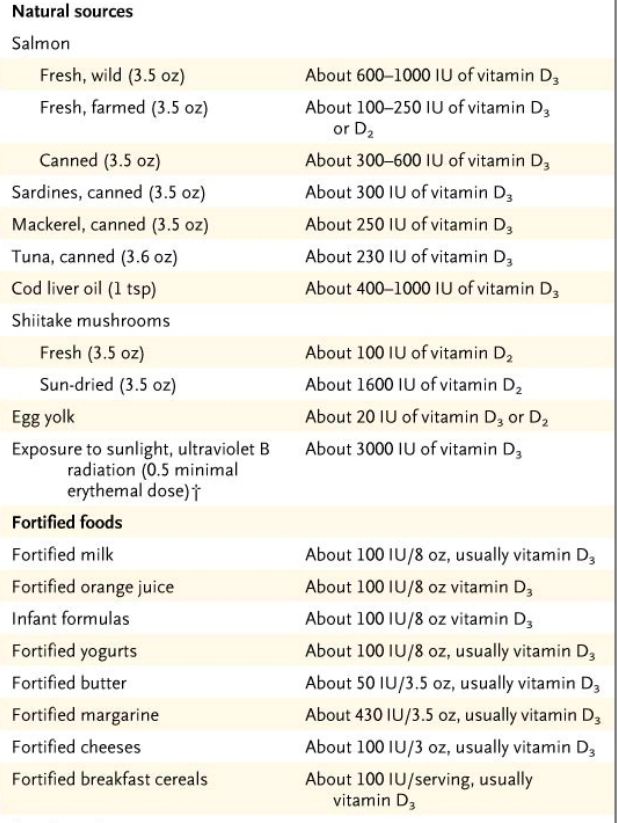
To prevent rickets, 400 int. units daily is recommended. This is either in 4 glasses of milk daily or through salmon, (wild) twice a week or 15 minutes of direct sunshine for caucasian skin. Everyone else should supplement. Read labels of the vitamins, and ensure you are getting up to 400 iu. My kids love the gummy vitamins but ensure you get the ones with adequate vitamin D! Read the labels.
For adolescents, recommendations are higher, 600iu
For general adults, 600-800 iu are recommended
For older adults at risk for falls, good research shows that vitamin d is useful for falls prevention. 800 int. units should be adequate to prevent falls for both men and women.
Conclusion
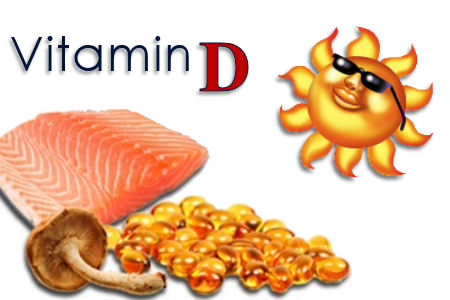
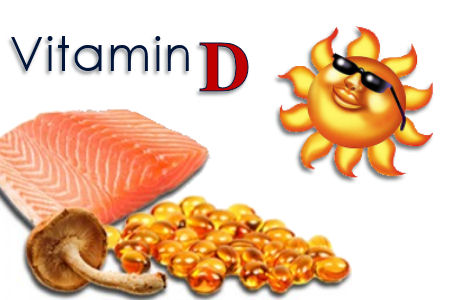
My take is that vitamin D, which is essential for bone health, should ideally be from natural, God made sources. That is, sunshine, fish and mushrooms. IF you can’t get it from these sources AND you are having symptoms, then it is when supplementation should be considered.
REFERENCES
- USPSTF Recommendation for Vitamin D screening. http://www.uspreventiveservicestaskforce.org/Page/Document/UpdateSummaryFinal/vitamin-d-deficiency-screening
- Hollick, MF. Vitamin D Deficiency. NEJM 2007;357:266-281. Found at: http://www.nejm.org/doi/full/10.1056/NEJMra070553
- Oh RC, Johnson JD. Chest pain and costochondritis associated with vitamin d deficiency: a report of two cases. Case reports in Medicine 2012: 375730. Found here: http://www.hindawi.com/journals/crim/2012/375730/
- Miller JR et al. Association of Vitamin D with Stress Fractures. A retrospective cohort study. Journal Foot Ankle Surgery 2015;55:117-120. Found here: http://www.jfas.org/article/S1067-2516(15)00374-9/abstract
- Cummings SR. Vitamin D Supplementation and increased risk of falling: A cautionary tale of vitamin supplements retold. JAMA 2015, January 4 2016. Found here: http://archinte.jamanetwork.com/article.aspx?articleid=2478893


 Robert Oh, MD, MPH